7–Minute Intel
Weekly Intel for the Defense Contracting World.
“Winning contracts starts with winning the follow-ups.”

1 Brief: AI Review Tightens Intel Reports
The Intelligence Community is stepping up how it vets and approves national security reports. Under new DNI Tulsi Gabbard, a stricter review process now uses AI tools alongside human oversight to double-check facts, sources, and inter-agency input.
This means reports must pass through additional approval layers before reaching top policymakers — helping limit leaks and ensure reports align with verified data. Some analysts say this extra gatekeeping can slow the flow of timely intelligence and cause teams to self-censor.
As more mission teams adopt AI for drafting and verifying assessments, expect more debate inside the IC about balancing speed, accuracy, and transparency.
2 Wins: New Awards
JHU APL Scores $389M DARPA R&D Modification
Johns Hopkins University Applied Physics Laboratory in Laurel, MD, secured a $388.8M modification to their DARPA IDIQ contract—boosting the total ceiling to over $1.1B for advanced R&D through Nov 2027.
- All work performed in Laurel, Maryland
- Focus on cutting-edge science & engineering for national defense
CACI Wins $85M Comptroller Systems Support Contract
CACI Inc.–Federal, based in Chantilly, VA, received an $85M contract to provide mission applications and systems support for the Office of the Undersecretary of Defense (Comptroller) through June 2030.
- Work located in Chantilly and Arlington, Virginia
- 12-month base + 4 option years; initial $15.5M obligated
2 Signals: Market Movement
House Restores Funding to CISA Amid Cyber Cutbacks
House appropriators pushed back on a planned $495M cut to the Cybersecurity and Infrastructure Security Agency, instead funding it at $2.7B — a sign that cyber defense still earns bipartisan support despite wider belt-tightening.
- $134M below FY25 levels, but higher than proposed cut
- Signals continued opportunity for cybersecurity contractors
GAO Warns DoD Weapon Systems Remain Slow & Over Budget
In fresh June testimony, the GAO flagged that DoD’s top 106 weapon programs — worth $2.4 trillion — still take an average of 12 years just to deliver initial capability. The report urges shifting from rigid, linear acquisition to modern, iterative cycles inspired by leading commercial practices.
- 30 major programs saw $49.3B in new cost growth
- Examples: B-52 radar delays & Columbia-class submarine overruns
- GAO calls for Agile, modular, and digital engineering practices
1 Chart: Americans Want Careful AI
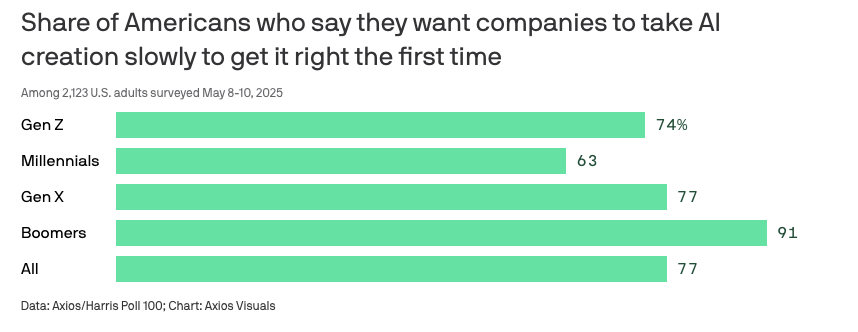
Source: 2025 Axios Harris Poll 100 | (Click to enlarge)
While the Intelligence Community doubles down on using AI to tighten national security vetting, this snapshot shows the public overwhelmingly wants AI development to be deliberate and error-free — not rushed.
It’s a clear signal that even as agencies push for AI speed and efficiency, trust and transparency must stay front and center.
1 Edge: ClearOps Story of the Week
In this Tuesday’s new post, I break down a truth we’ve all heard but rarely live by: it doesn’t matter what you know — it matters who you know, and whether you wrote it down. If you think you know your network well enough to find a Plan B when you need it most, think again.
This piece covers why cleared professionals lose valuable connections, why LinkedIn isn’t enough, and how ClearOps helps you build a living, trusted network you can actually rely on. No more scrambling through old inboxes or trying to remember where your best contacts went — ClearOps keeps your relationships organized, current, and ready when you need them.
See How ClearOps Works →“Contracting success isn’t about who you know — it’s about who you remember to follow up with.”
Stay Plugged In
See previous newsletters and ClearOps blogs at blog.thebuchananenterprises.com
Leave a Reply